WANT TO SAVE THIS RECIPE?
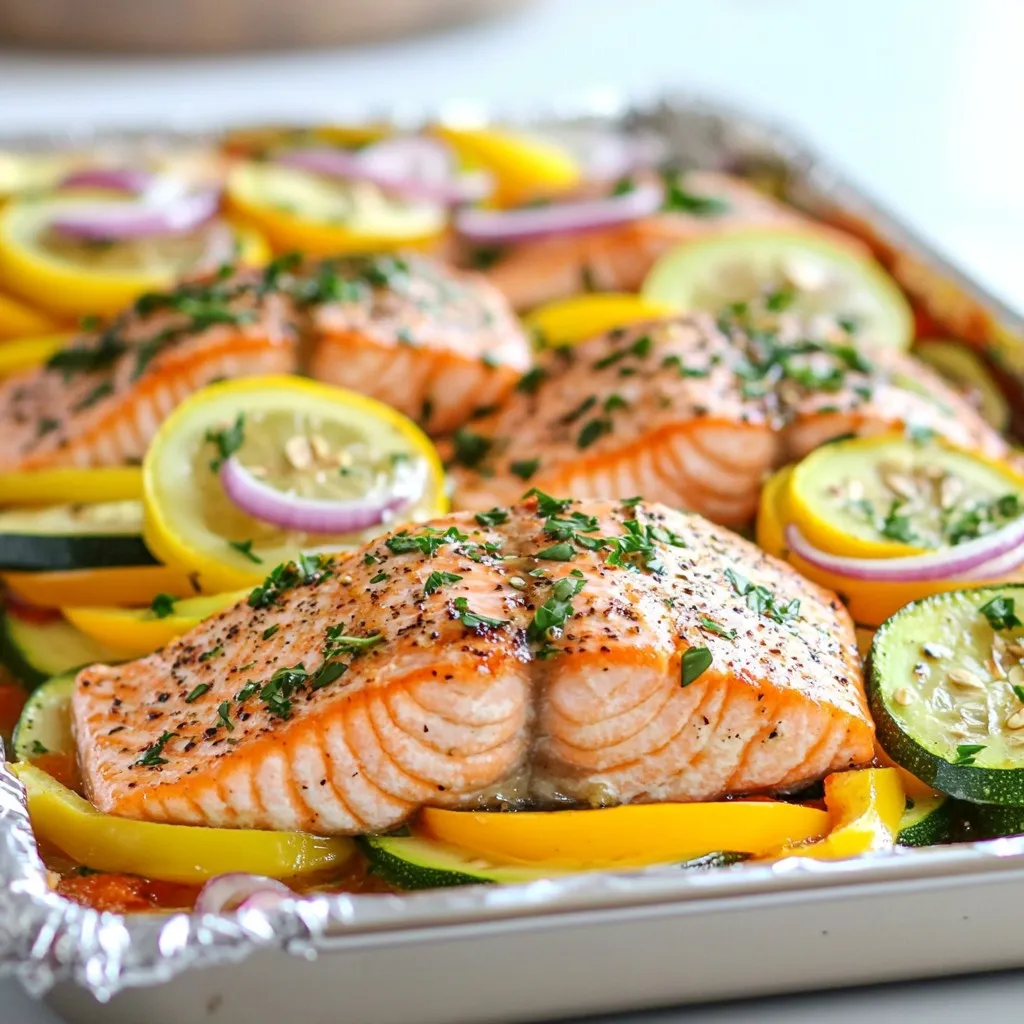
Looking for a hassle-free yet delicious dinner? Baked Salmon Foil Packs are your answer! This easy recipe combines fresh salmon fillets, vibrant veggies, and flavorful marinades, all sealed in foil for a tasty meal. It’s quick, clean, and perfect for busy nights. Let’s dive into how you can create this fresh meal idea that everyone will love!
Why I Love This Recipe
- Quick and Easy: This recipe is a breeze to prepare, taking only 10 minutes of prep time, making it perfect for busy weeknights.
- Flavorful Marinade: The combination of lemon, garlic, and herbs creates a zesty and aromatic marinade that elevates the salmon to new heights.
- Healthy and Nutritious: Packed with omega-3 fatty acids from the salmon and vitamins from the vegetables, this dish is both delicious and good for you.
- Minimal Cleanup: Cooking in foil packets means less mess and easy cleanup, allowing you to enjoy your meal without the hassle of washing multiple dishes.
Ingredients
Main Ingredients
– 2 fresh salmon fillets (about 6 ounces each)
– 1 medium zucchini, sliced into thin rounds
– 1 colorful bell pepper, sliced into strips
– 1 small red onion, thinly sliced
– 2 tablespoons extra virgin olive oil
– 2 cloves fresh garlic, minced
– Juice of 1 large lemon
– 1 teaspoon dried oregano
– 1 teaspoon dried thyme
– Salt and freshly ground black pepper to taste
– Fresh parsley, chopped, for garnish
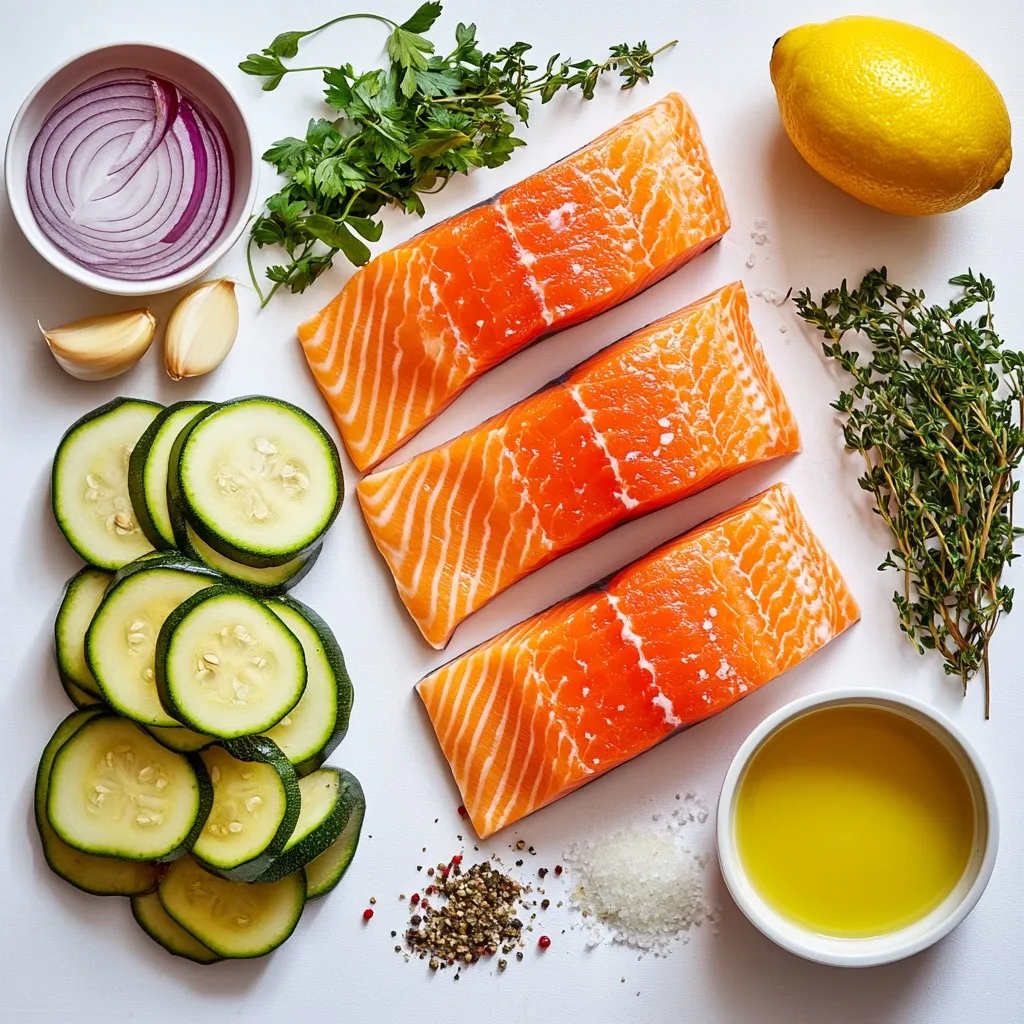
You need fresh salmon fillets for this dish. Look for fillets that are firm and moist. The vegetables add color and crunch. Zucchini, bell pepper, and red onion work well together. The olive oil, garlic, and lemon juice create a tasty marinade. Dried oregano and thyme give depth to the flavor. Don’t forget to add salt and pepper to enhance everything!
Optional Add-ins
– Additional herbs or spices
– Cooking liquids
You can add other herbs like dill or basil for different flavors. Want a little kick? Try adding some red pepper flakes. You can also use cooking liquids like white wine or vegetable broth. These add more moisture and flavor to the salmon and vegetables.
Equipment Needed
– Aluminum foil
– Mixing bowl
– Baking sheet
Gather your tools before you start. You need aluminum foil to create the packets. A mixing bowl helps you blend the marinade easily. A baking sheet will make moving the foil packets to the oven simple. Make sure everything is ready before you begin your meal prep.
Step-by-Step Instructions
Prepping the Oven and Foil
First, you need to preheat your oven to 375°F (190°C). This step ensures your salmon cooks evenly. Next, prepare two large sheets of aluminum foil, each about 12 inches long. Lay them flat on a clean surface. This will make it easy to pack everything later.
Mixing the Marinade
In a mixing bowl, combine 2 tablespoons of olive oil, 2 cloves of minced garlic, the juice from 1 lemon, 1 teaspoon of dried oregano, and 1 teaspoon of dried thyme. Add a pinch of salt and pepper for taste. Whisk these together until they blend well. This marinade will give your salmon and veggies a burst of flavor.
Assembling the Foil Packs
Place each salmon fillet in the center of a foil sheet. Make sure there’s enough space around the fish to fold the foil later. Next, add the sliced zucchini, bell pepper, and red onion around the salmon. Distribute the vegetables evenly to balance the flavors. Now, drizzle the olive oil mixture over everything. Ensure each piece is coated for the best taste. Finally, carefully fold the foil edges over the salmon and veggies. Press to seal tightly, making sure no steam can escape.
Baking the Foil Packs
Transfer the sealed foil packets onto a baking sheet for easy handling. Slide them into your preheated oven and bake for 20-25 minutes. To check if the salmon is done, look for it to be opaque and flake easily with a fork. When it’s ready, carefully remove the foil packs from the oven. Open each one slowly to let the steam out. For a fresh touch, sprinkle some chopped parsley on top before serving.
Tips & Tricks
Achieving Perfectly Cooked Salmon
Check salmon for flakiness by using a fork. Gently press the fish. If it flakes easily, it’s done. For thicker fillets, aim for 20-25 minutes at 375°F. Thinner fillets may need less time. Always keep an eye on your salmon to avoid overcooking.
Enhancing Flavor
Marinades can boost your salmon’s taste. Try mixing lemon juice, olive oil, and herbs. Let the salmon soak in the marinade for at least 15 minutes. This allows flavors to meld. You can add garlic for an extra kick. Fresh herbs like dill or basil also work well.
Foil Pack Sealing Techniques
Seal your foil packs tightly. Fold the edges several times to trap steam. This keeps your salmon moist and tender. Make sure there are no openings. A good seal ensures even cooking. If you want extra flavor, add a splash of broth or wine before sealing.
Pro Tips
- Choose Fresh Salmon: Opt for wild-caught salmon if available, as it tends to have a richer flavor and firmer texture compared to farmed salmon.
- Vegetable Variations: Feel free to mix and match vegetables based on your preference or seasonal availability. Asparagus, cherry tomatoes, or broccoli also work beautifully.
- Seal Well: Ensure that the foil packets are tightly sealed to trap steam inside. This helps the salmon cook evenly and keeps it moist.
- Rest Before Serving: Allow the foil packets to rest for a few minutes after removing them from the oven. This helps the juices redistribute for optimal flavor.
Variations
Different Protein Alternatives
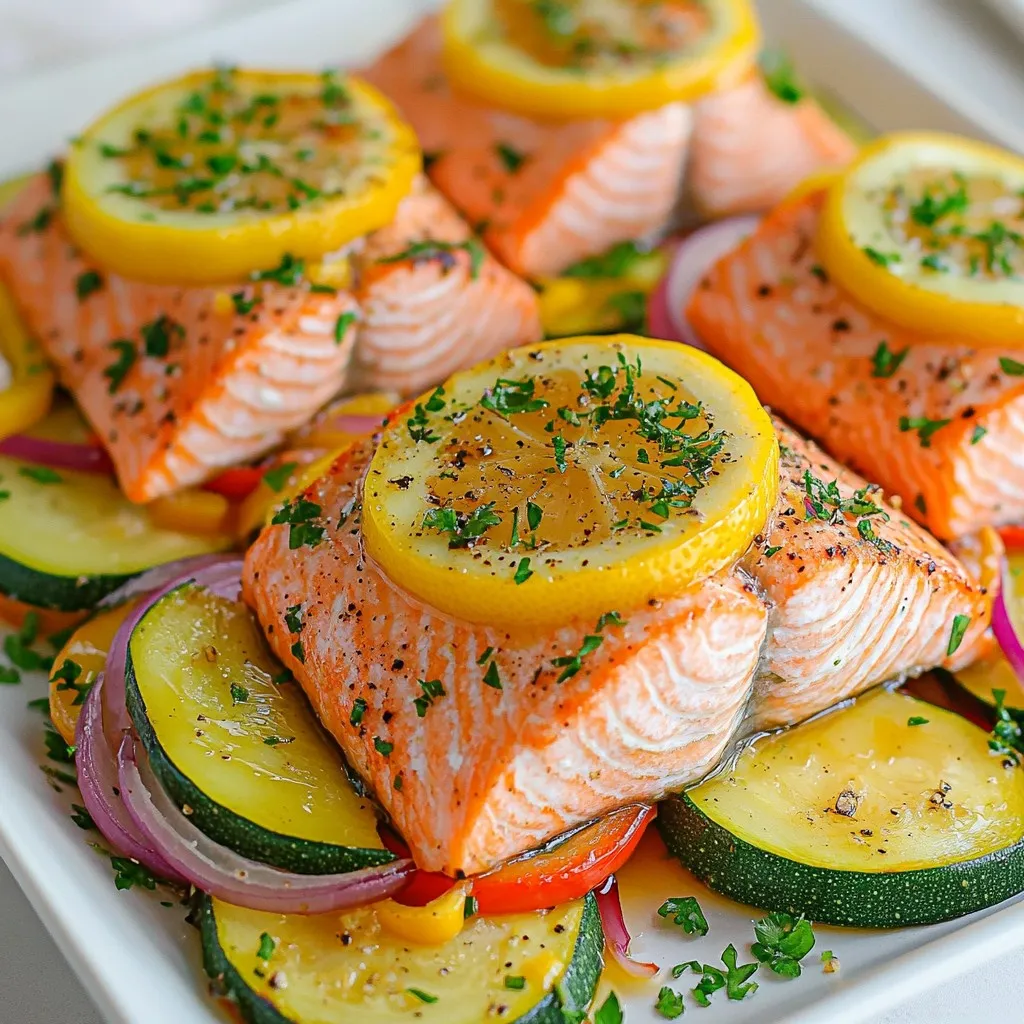
You can swap salmon for other proteins. Chicken breast works great. Use boneless, skinless chicken. Shrimp is another tasty choice. They cook fast and soak up flavors well. For both chicken and shrimp, adjust cooking time. Chicken usually takes longer than salmon. Shrimp cooks quickly, about 10-15 minutes.
Seasonal Vegetable Options
Feel free to mix up your veggies. Use what is fresh and available. Try asparagus in spring or butternut squash in fall. Broccoli and green beans add crunch and color. Carrots bring a nice sweetness, too. Always aim for a mix of colors for a beautiful dish.
Flavor Profile Changes
You can change the whole vibe of your meal. For an Asian twist, add soy sauce and ginger. Swap out the lemon for lime for a zesty kick. You could even use sesame oil in place of olive oil. For a Mediterranean flair, try adding olives and feta cheese. The options are endless, so have fun experimenting.
Storage Info
Storing Leftovers
To store your cooked salmon foil packs, let them cool. Place each pack in an airtight container. You can also keep them in the foil but cover tightly with plastic wrap. Store in the fridge for up to three days. This keeps the salmon fresh and tasty.
Reheating Instructions
Reheat salmon packs gently to avoid drying them out. You can use the oven or microwave. For the oven, preheat to 350°F (175°C). Place the foil packs on a baking sheet and heat for about 10-15 minutes. If using a microwave, open the foil carefully, place the salmon on a microwave-safe plate, and cover loosely. Heat for about 1-2 minutes. Check often to keep it moist.
Freezing Guidelines
You can freeze uncooked or cooked salmon foil packs. For uncooked packs, wrap tightly in plastic wrap and then in foil. Store in the freezer for up to three months. For cooked packs, let them cool first, then place in airtight containers. They also last about three months in the freezer. When ready to use, thaw overnight in the fridge before reheating.
FAQs
How long does it take to bake salmon in foil?
Baking salmon in foil takes about 20-25 minutes at 375°F (190°C). The time may vary based on the thickness of the fillets. For thinner fillets, check for doneness at 15 minutes. For thicker pieces, it may need up to 30 minutes. Always watch the salmon closely to ensure it stays juicy.
Can I use frozen salmon?
Yes, you can use frozen salmon! Just add a few more minutes to the baking time. If your salmon is frozen, it’s best to bake it for about 30-35 minutes. Make sure to check if it flakes easily with a fork when done. This method ensures a tasty meal without thawing.
What can I serve with baked salmon foil packs?
Baked salmon foil packs pair well with several sides. Try fluffy rice or quinoa. These grains soak up the delicious juices. A simple green salad adds freshness and crunch. You can also serve roasted potatoes or steamed asparagus for a complete meal that looks great on the plate.
How do I know when salmon is done?
You can tell salmon is done when it turns opaque and flakes easily with a fork. Use a fork to gently press down on the fillet. If it breaks apart easily, it is ready to eat. Additionally, the internal temperature should reach 145°F (63°C) for safe consumption.
This blog post covered the essentials of making delicious salmon foil packs. We went through the key ingredients, the step-by-step cooking process, and helpful tips for flavor. You learned about variations and storage tips too.
In wrapping up, creating these foil packs is simple and fun. You can enjoy a tasty meal without much mess. So go ahead, experiment with ingredients, and make it your own! You’ll love the result
Lemon & Herb Baked Salmon Foil Packs
Delicious salmon fillets baked with fresh vegetables and a zesty lemon herb marinade, all wrapped in foil for easy clean-up.
Course Main Course
Cuisine American
Servings 2
Calories 350 kcal
- 2 fillets fresh salmon
- 1 medium zucchini, sliced into thin rounds
- 1 colorful bell pepper sliced into strips
- 1 small red onion, thinly sliced
- 2 tablespoons extra virgin olive oil
- 2 cloves fresh garlic, minced
- 1 large lemon, juiced
- 1 teaspoon dried oregano
- 1 teaspoon dried thyme
- to taste salt and freshly ground black pepper
- for garnish fresh parsley, chopped
Begin by preheating your oven to 375°F (190°C) to create the perfect baking environment.
Prepare two large sheets of aluminum foil, each measuring about 12 inches in length, laying them out on a clean surface.
In a mixing bowl, combine the olive oil, minced garlic, lemon juice, dried oregano, dried thyme, and a generous pinch of salt and pepper. Whisk until well blended to create a flavorful marinade.
Center each salmon fillet on its respective foil sheet, ensuring you have enough space to fold the foil later.
Artfully arrange the slices of zucchini, bell pepper, and red onion around the salmon, distributing the vegetables evenly across both packets for balanced flavors.
With a steady hand, drizzle the prepared olive oil mixture over the salmon and vegetables, ensuring everything is well-coated for maximum flavor.
Carefully fold the edges of the foil over the salmon and vegetables, pressing to create a well-sealed packet. Be meticulous, making sure there are no openings for steam to escape, which is essential for even cooking.
Transfer the foil packets onto a baking sheet for easy handling. Slide them into the preheated oven and bake for 20-25 minutes, or until the salmon is opaque and flakes easily with a fork.
Once cooked, take the foil packs out of the oven with caution—open them slowly to let the steam escape safely. Finish with a sprinkle of fresh chopped parsley for a burst of color and freshness before serving.
Serve with rice or quinoa for a complete meal.
Keyword baked, easy, foil packs, healthy, salmon
WANT TO SAVE THIS RECIPE?